
Search
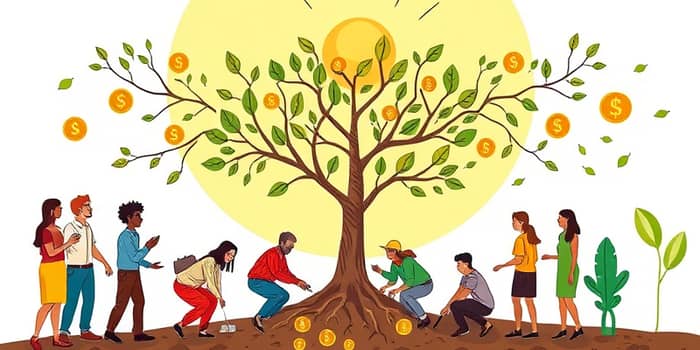
In an era where financial decisions ripple across societies and ecosystems, credit is evolving beyond its traditional role.
Ethical credit represents a transformative approach that prioritizes social and environmental impact alongside financial returns.
By integrating sustainability into lending practices, it builds trust between institutions and communities, unlocking potential for growth and justice.
This article explores how ethical credit can reshape finance for the better.
It offers practical insights and inspiring examples to guide both lenders and borrowers toward more responsible choices.
At its core, ethical credit involves assessing loans based on criteria beyond profit.
It incorporates factors like environmental stewardship, social equity, and long-term sustainability.
Key concepts include the Ethical Grade Concept, which evaluates borrowers' practices and impacts.
This helps banks guide lending toward positive societal outcomes.
Trust is fundamental, built through transparency and fair practices.
Opportunity building expands access to credit for underserved groups.
Implementing ethical credit requires adopting proven strategies that drive positive change.
These practices not only benefit society but also strengthen financial institutions.
Institutions like Triodos Bank exemplify this with rigorous ethical screenings.
They finance renewable energy and organic farming, setting a high standard.
The advantages of ethical credit extend across multiple dimensions, creating a win-win scenario.
For society, it promotes sustainability and alleviates poverty through targeted investments.
Lenders gain enhanced reputation and tap into untapped markets with less competition.
Economically, it improves credit decisions and risk management, especially with AI integration.
In 2026, credit unions are leveraging AI to offer proactive alerts and financial wellness.
Despite its promise, ethical credit faces significant hurdles that must be addressed.
One major issue is the lack of standardization in ethical criteria, leading to accusations of bias.
Greenwashing, where claims are exaggerated, undermines trust and effectiveness.
Access exclusions can deny credit to businesses that could improve with support.
Balancing impact with repayment poses a risk-return trade-off for lenders.
Financial crime is escalating, with record SARs filings adding compliance burdens.
The future of credit is shaped by technological advancements and shifting priorities.
AI adoption is accelerating, with credit unions planning investments for ethical decisioning.
Global credit conditions remain resilient, supported by tech investments and economic growth.
These trends highlight the need for adaptive strategies in ethical lending.
Lending shifts include embedded finance and real-time data APIs for inclusivity.
To overcome challenges, institutions must adopt forward-thinking approaches.
Standardizing criteria and ensuring transparency are crucial steps for credibility.
Credit unions should blend AI with cooperative values to maintain member trust.
Banks need robust AML systems and board-level oversight for data ethics.
Future strategies must address politics, innovation, and local funding markets.
Ethical credit is not just a trend; it's a movement toward a more equitable world.
By prioritizing trust and opportunity, lenders can drive meaningful societal change.
Borrowers benefit from access to capital that supports their values and growth.
Examples like Triodos Bank and Grameen Bank show that success is achievable.
As we look to 2026, the integration of AI and ethical principles offers new hope.
Credit unions emphasizing member engagement will lead in building community trust.
Ultimately, ethical credit empowers everyone to contribute to a sustainable economy.
It transforms finance from a transactional tool into a force for good.
Embrace these practices to not only enhance your financial health but also leave a positive legacy.
Start by evaluating your lending or borrowing choices through an ethical lens today.
References