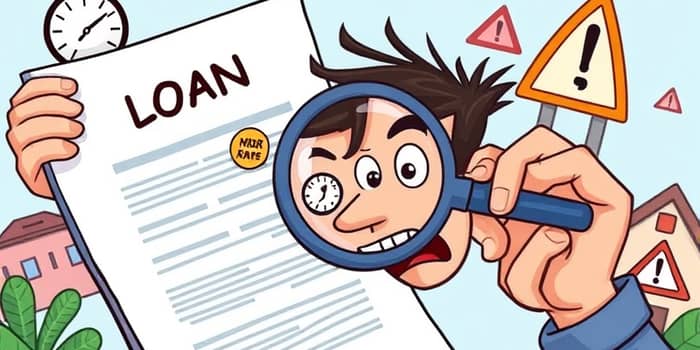
In today's financial world, loan offers flood our inboxes and screens, often appearing as lifelines during tough times.
However, not all offers are created equal, and spotting a bad loan can prevent devastating financial consequences.
This guide empowers you to recognize red flags and make informed decisions that protect your future.
By understanding key signs, you can confidently say no to predatory practices and safeguard your hard-earned money.
Let's dive into the essential characteristics that signal a loan offer is too good to be true.
Predatory Loan Characteristics
Predatory lending involves unfair terms designed to exploit borrowers, often targeting vulnerable individuals.
High costs and exploitative practices can trap you in a cycle of debt.
- Extremely high interest rates that exceed market norms, such as triple-digit APRs in payday loans.
- Confusing terms with vague explanations of fees and payments.
- Pressure tactics that rush you into immediate acceptance.
- No credit checks, which might seem helpful but offset risk with excessive fees.
- Balloon payments that lead to massive final sums, forcing refinancing.
- Excessive collateral requirements for small loan amounts.
- Loan flipping through repeated refinancing to add fees.
- Aggressive marketing with unsolicited contacts promising easy cash.
- Hidden fees that inflate the total repayment cost significantly.
- Loan packing or equity stripping, adding unnecessary products to the loan.
These practices are red flags that should prompt careful scrutiny.
Understanding these signs helps you avoid traps set by unscrupulous lenders.
Scam and Fraud Indicators
Scams often involve deceptive tactics that promise easy money but deliver only loss.
Recognizing these indicators can protect you from fraudulent schemes.
- Guaranteed approval promises that no legitimate lender would offer, especially to those with bad credit.
- Requests for upfront fees via prepaid cards or gift cards before releasing funds.
- Unsolicited contact through calls, texts, or emails offering loans without prior inquiry.
- Lack of state registration or a physical address for verification purposes.
- High-pressure tactics that threaten to withdraw offers if not accepted immediately.
- Hidden fee disclosures after initial "approval," making costs unclear.
Staying vigilant against these signs ensures you don't fall victim to financial fraud.
Application and Document Red Flags
From a lender's perspective, inconsistencies in applications signal fraud risk, but borrowers can spot these too.
Watch for warning signs in the documents you provide or receive.
- Forged or altered documents with inconsistent fonts, signatures, or metadata.
- Incomplete or blank sections that hide critical information intentionally.
- Inconsistent personal details like mismatched addresses or income figures.
- Lack of supporting documentation when requested for verification.
- Unusually high income claims that don't align with job titles or history.
- Frequent address changes that obscure financial background checks.
- Unusual loan purposes or collateral that doesn't match stated needs.
- Default history such as bankruptcies or late payments not disclosed upfront.
- Falsified employment information with non-existent companies listed.
- Poor grammar or spelling in documents, indicating rushed or fake submissions.
These red flags help identify offers that may be based on fraudulent premises.
Lender Behavior Warnings
How a lender behaves during the process can reveal their intentions.
Reputable lenders are transparent and patient, while predatory ones use manipulative tactics.
- Rushing or bait-and-switch tactics that dangle low intro rates but change terms later.
- Higher-than-average rates that seem too good to be true upon closer inspection.
- Encouragement to make false statements on applications, which is illegal and risky.
- No credit pull, which is expected for legitimate loans to assess risk properly.
- Lack of transparency in explaining fees, rates, or contract terms clearly.
- Aggressive follow-ups that create unnecessary urgency and pressure.
Observing lender behavior can guide you toward trustworthy financial partners.
Regulatory and Protective Measures
Government agencies like the CFPB, FTC, and FDIC define and combat predatory lending.
Knowing your rights and taking proactive steps is crucial for protection.
- Request a full fee breakdown including APR, origination fees, and total repayment cost.
- Read every page of the contract thoroughly before signing anything.
- Verify the lender through official channels, state registries, and physical addresses.
- Avoid making urgent decisions; take time to shop and compare multiple offers.
- Check your credit reports regularly to spot inaccuracies or fraud signs early.
- File reports with authorities if you suspect fraudulent or predatory activity.
- Research state laws that cap interest rates and protect against unfair practices.
- Walk away from any offer demanding upfront fees before disbursement.
- Use resources from regulatory bodies to educate yourself on fair lending practices.
- Seek advice from financial advisors or non-profit organizations for guidance.
These measures empower you to navigate the loan landscape safely and confidently.
By integrating this knowledge into your financial decisions, you can avoid pitfalls.
Remember, a good loan should feel like a partnership, not a trap.
Stay informed, ask questions, and trust your instincts when something feels off.
Your financial health is worth the extra effort to ensure you're making the right choice.